Bespoke and made-to-measure: a necessary distinction
Two expressions often used as synonyms in fact describe two profoundly different ways of creating a garment.
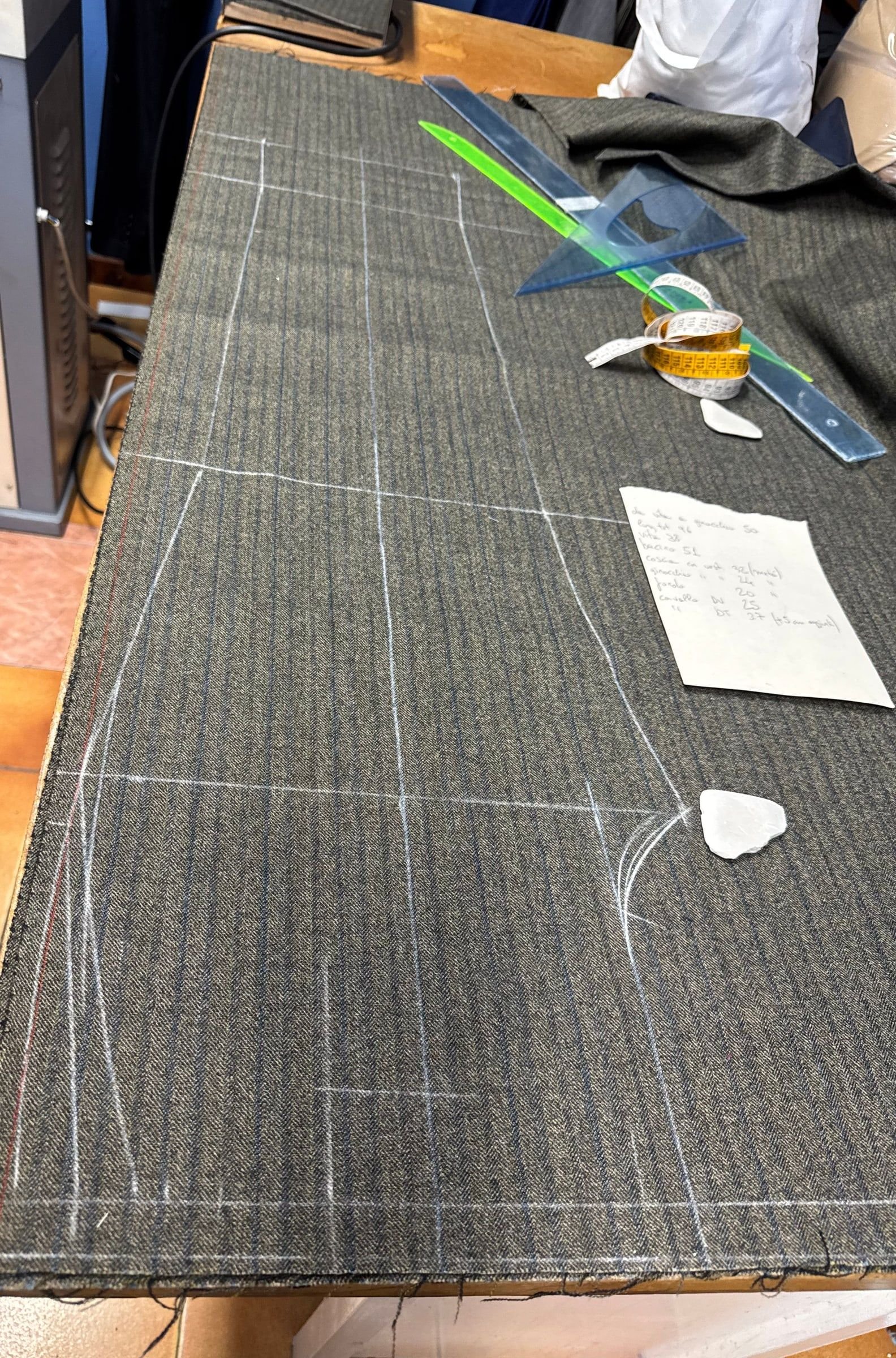
In everyday language, “made to measure” has become an elastic phrase. It is used for a garment built from nothing and for an industrial piece altered by a few centimetres. Yet the difference between these two worlds is not a nuance: it is a matter of method and, above all, of the relationship with the person.
What bespoke means
The word comes from English tailoring: a length of cloth was bespoken, “spoken for”, by a particular client. Ever since, it has described a garment that does not exist before the meeting with the one who will wear it. There is no base model to adapt: there is a paper pattern drafted anew, from the measurements, posture, proportions and habits of a single person.
And made-to-measure?
Made-to-measure begins instead with an existing model, adjusted within preset parameters: a sleeve is lengthened, a waist taken in, a lapel chosen from a catalogue. Production is largely industrial. The result may be correct, but it remains a variation on a theme already written.
The fittings: a garment that draws closer to the person
In bespoke, a garment is built in stages. The fittings, usually three, make it possible to verify on the body what on paper is still a hypothesis: the balance of the shoulders, the fall of a line, the way the cloth follows movement. With each fitting the garment draws closer to its wearer.
A pattern that remains
At the end, the paper pattern is not thrown away. It is kept: the memory of a form that belongs to one person alone, and the starting point for every future creation.
At Maison Bourelly we create bespoke garments exclusively. Not as a matter of principle, but because we believe a garment should be born of the person who wears it, and not the other way round.