How much does a bespoke suit cost: what determines its value
The method, the cloth, the hours of hand work, the fittings: what determines the value of a made-to-measure garment, and why there is no single price for everyone.
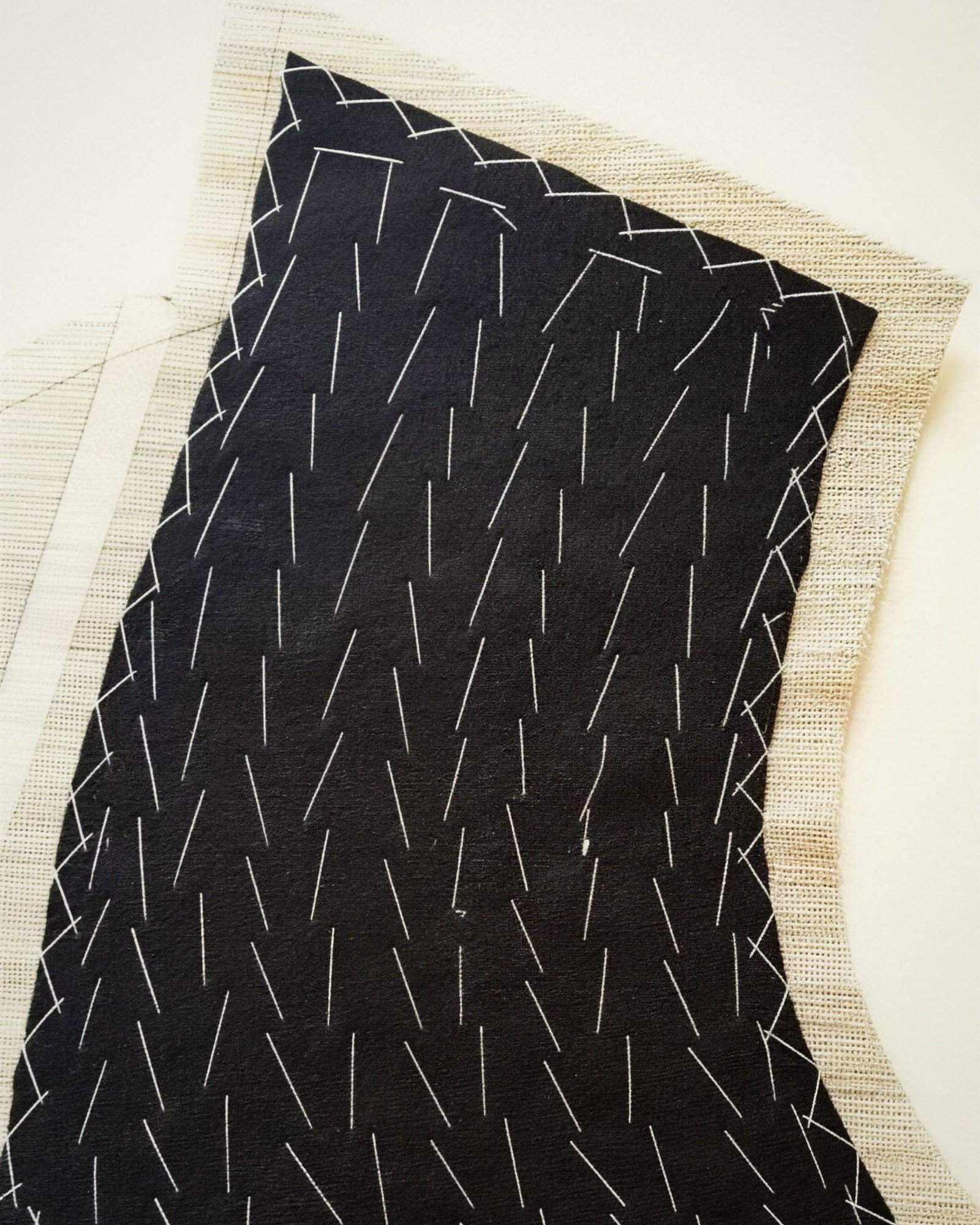
It is the question almost everyone asks before entering an atelier, and often the hardest one to ask out loud: how much does a bespoke suit cost? The honest answer is that there is no figure that holds for everyone. A bespoke garment is not an object in a shop window with a price tag: it is a project born from meeting a person, and its value is built one choice at a time.
There are, however, a few precise factors that determine it. Knowing them helps to understand what one is buying, and to compare proposals that, under the same name, can be very different: the method, the cloth, the hours of hand work, the fittings and the complexity of the garment.
The method: bespoke or made-to-measure
Two worlds live under the words “made to measure”. Made-to-measure starts from an existing industrial pattern, altered within set limits: a sleeve lengthened, a waist taken in. Bespoke starts from a blank sheet: a paper pattern drawn from scratch for one person alone, from their measurements, their posture, the way they move.
This is the most important difference, and on its own it explains much of the distance between two proposals. We explore it further in Bespoke and made-to-measure: a necessary distinction.
The cloth
The cloth is the part of the value one sees and touches first. What matters is the fibre (wool, cashmere, mohair, silk), the mill that weaves it and its fineness. Fine wools often carry a “Super” number: under the labelling code of the International Wool Textile Organisation, it states the maximum diameter of the fibre. A Super 150’s, for instance, is woven from wool with an average diameter of no more than 16.25 microns: the finer the fibre, the softer and rarer the cloth.
Finer, however, does not always mean more suitable. A suit worn every day calls for a more resilient wool; a ceremony suit can afford a more delicate one. Quantity matters too: a double-breasted jacket, a three-piece suit or an overcoat need more cloth.
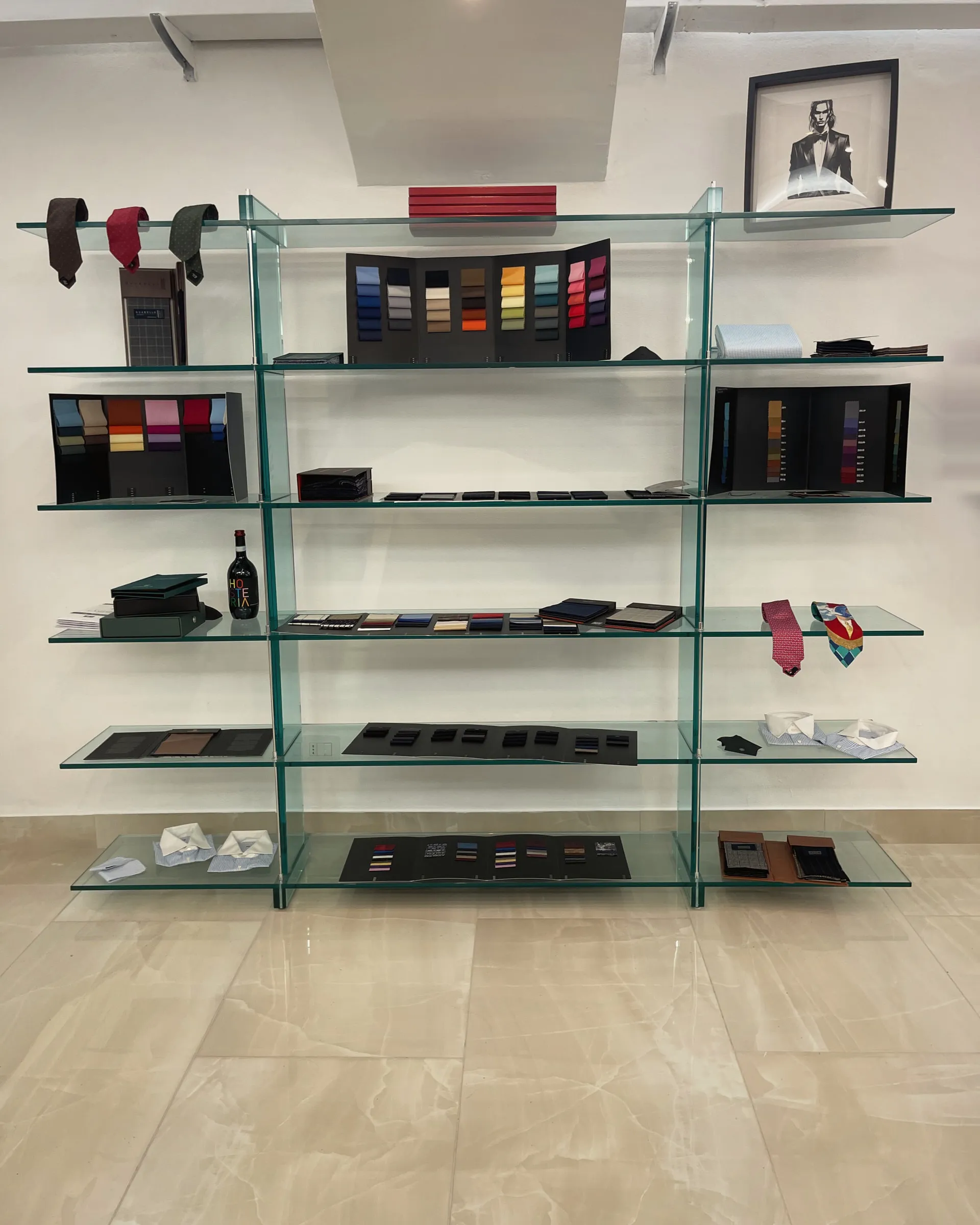
In the Milan atelier, cloth bunches from the great mills.
At the Maison, cloths for men come from the collections of Dormeuil, Loro Piana, Zegna and Holland & Sherry; for women and brides, from the silks, laces and embroideries of the great mills. The choice is made together, touching the cloth and looking at it in the light.
The hours of hand work
What truly sets a tailored suit apart cannot be seen from the outside. The Savile Row Bespoke Association, which brings together London’s historic tailoring houses, asks its members for at least fifty hours of hand work on a two-piece suit.
Many of those hours go into the inner structure of the jacket. In an industrial garment the front is stiffened by a fused interlining, glued to the cloth with heat. A tailored jacket is hand-canvassed: between the cloth and the lining sits a canvas of wool and horsehair, held by hundreds of small stitches that shape the chest and make the lapel roll naturally. Such a canvas follows the body, breathes and over time takes on the shape of its wearer; a fused interlining, on the other hand, can come away from the cloth over the years and form small bubbles.
Then come the hand-sewn buttonholes, the sleeves set by hand, the finishing inside: details that never show in a photograph, but are felt when wearing the suit.
The paper pattern and the fittings
In bespoke, a garment is built by successive approaches. After the measurements, the paper pattern is drawn and the cloth is cut; then come the fittings, usually three, where the garment, still basted, is checked on the body and corrected. Each fitting means unpicking, recutting, sewing again. It is work that leaves no visible trace in the finished garment, yet it is exactly what makes it unlike any other.
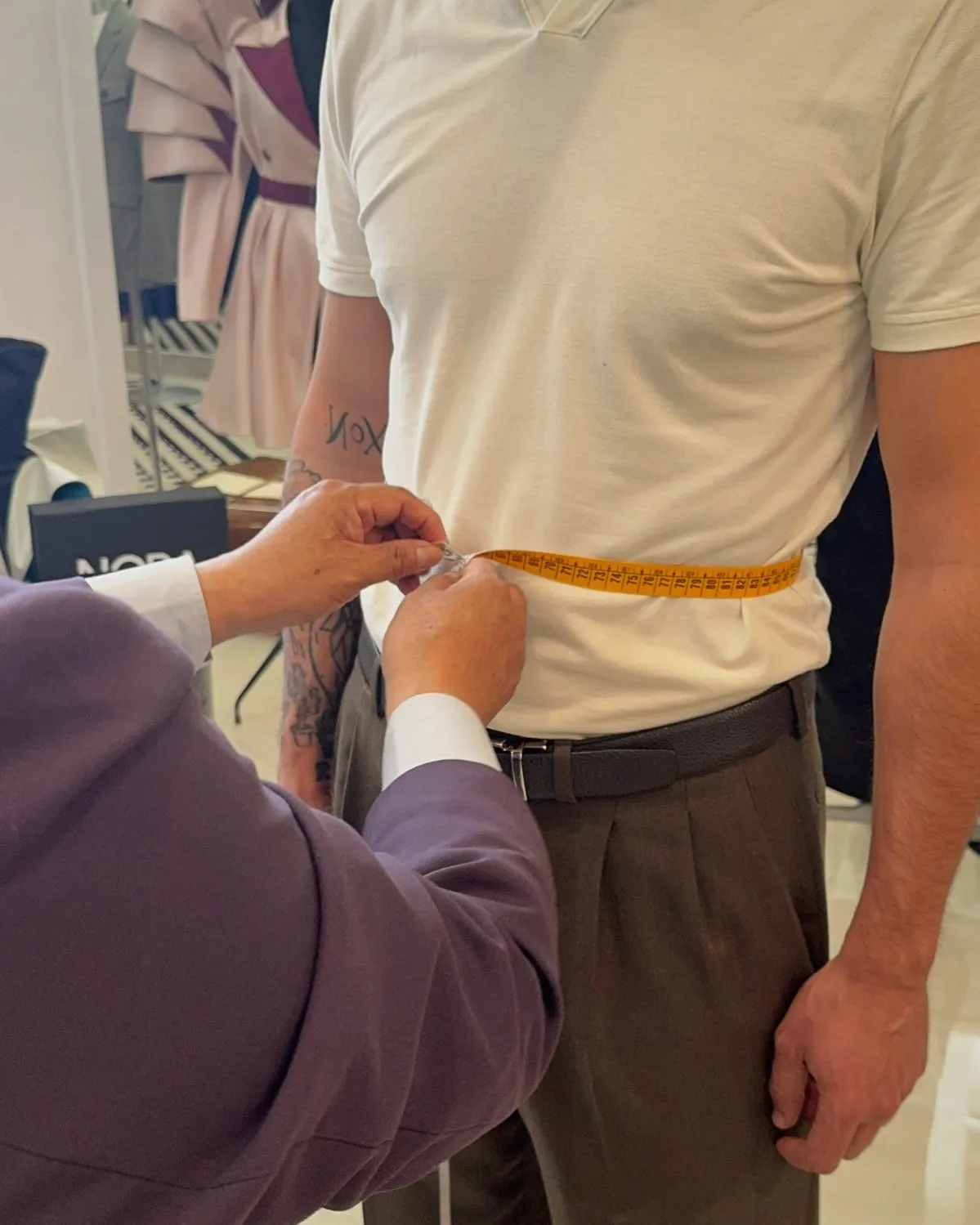
Taking measurements: the first step towards the paper pattern.
The paper pattern is never thrown away: it is kept in the atelier and becomes the starting point for every future garment.
The complexity of the garment
A jacket is not a three-piece suit, and a three-piece suit is not a morning coat or an overcoat. The value grows with the number of parts to build, with the details chosen (double-breasted, a waistcoat, working buttonholes on the cuffs) and with the number of garments commissioned together.
Women’s tailoring follows the same principle, with other variables: a drape, an inner corsetry built on the body, embroidery and appliqués made by hand. A wedding dress is often the most complex project of all: it begins with a hand-drawn sketch and goes through work that calls for the most expert hands in the atelier.
Why there is no price list
For all these reasons, in high tailoring the price is not read from a list: it is defined together. During the first meeting we talk about the occasion, how the garment will be used, the seasons it will be worn in; we touch the cloths, discuss lines and details. Only then is it possible to present a precise proposal, one that corresponds to that garment and no other.
A value that lasts
Finally, it makes sense to look at value over time. A garment built by hand, in a well-chosen cloth, accompanies its owner for many years: tailors leave generous inlays inside so that it can be adjusted if the body changes, and the paper pattern kept on file makes every future garment simpler. It is not a seasonal purchase: it is a garment that stays.
At our Maison in Milan we make bespoke garments exclusively: suits, jackets and overcoats for men, ceremony and evening gowns and wedding dresses. The proposal for each garment is presented in person, during the first meeting at the atelier. Book an appointment.